

Fast Delivery, Human Cost: Who Protects India’s Delivery Workers?
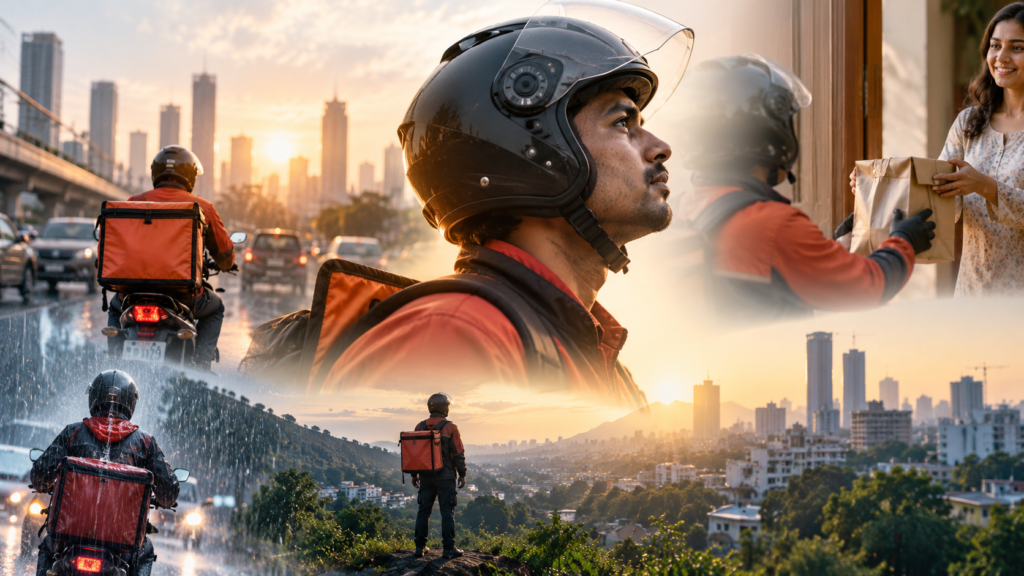
The packet of milk arrives before the tea is made. The dinner is delivered while the family has been watching TV. Delivery apps have come to be a way of life for many Indian families. They enable elderly members, working parents, small enterprises, and customers that are unable to go out of their home.
However, between placing the order and its arrival, somebody had traveled through traffic jams, waited at restaurants, searched for the unknown address and carried the order upstairs. The app displays minutes. But the reality behind them is never shown.
Delivery workers need to receive the same level of basic respect that everyone expects to have in their workplace: a fair workload, safety, and assistance if anything happens. Convenience is important. Yet, so is the person who provides it.
Additional risks besides road accidents
Though road accidents are the most common risks that one encounters, there are other less obvious risks in the process of delivery. As per the findings of the Centre for Internet and Society, the risk factors include difficult weather conditions, theft, and physical abuse along with the risk of road safety.
In hot weather, being out in the heat for too long can result in dehydration and exhaustion. In the monsoon season of Kerala, rain on the road, low visibility, and water-logged routes pose a different set of difficulties. At times, the rider is weighing his options while the customer inside his/her home sees only a delayed order.
Lifting the load, carrying the load on a two-wheeler, and walking through stairs poses a strain on the rider’s body. The availability of toilet facility, access to drinking water, and a resting place must be some basic facilities provided at workplaces. For a rider running from restaurant to shops and buildings, such basic things prove to be difficult.
Besides the physically demanding nature of the work, there is the psychological pressure of the uncertainties surrounding earnings, rating, changes in incentive schemes and fear of losing access to the work. In the situation where earning depends on the number of deliveries made, “taking a break” has little meaning if the worker can afford such a break.
Additionally, female delivery workers will require a working arrangement that caters for issues such as harassment, remote delivery points and access to toilet facilities. It is important to design a policy that caters for the worker and her work environment.
Finally, the delivery hubs will require inspection. Issues such as overloaded extension boards, blocked exits and risky battery recharging can be found in storage and waiting areas.
Government intervention: what it aimed to tackle
In January 2026, the Labour Ministry of the Government of India stepped in over worries related to "10-minute delivery" commitments. Reports said that Labour Minister Mansukh Mandaviya demanded platforms remove "10-minute delivery" branding due to worker safety and rights concerns. Industry News – Business Standard
Reuters later reported that Blinkit, Zepto, Swiggy and Flipkart had removed "10-minute delivery" promotion. Fast delivery in general remained possible. It was a change to the promise made to customers, not a nation-wide ban on delivery of products in ten minutes. Reuters
The issue is important because the advertisement of deadline affects expectations for the entire delivery process. Even if the speed is achieved through proximity of the warehouses and efficient packing, a customer may think that any delays are caused by a rider's mistakes. It becomes easier to eliminate that expectation. The question is whether working conditions are improved with the elimination of the promise.
Moreover, there is a broader initiative on improving social security. According to the Ministry, the Code on Social Security, 2020 entered into force on 21 November 2025 and contains provisions for schemes for gig and platform workers. They relate to accident insurance,
What safer delivery work should involve?
Safer delivery work must begin with a safer process, including preparation, from the beginning. The platforms need to evaluate the entire process: collection, transport, parking, entrance into the building, handling, and the return. Workers need to help identify potential hazards since they know where the real challenges lie.
Delivery estimations should take into account traffic and weather, restaurant waiting and building entry. Workers should be able to notify their employer about dangerous routes and stop deliveries in the face of dangerous conditions without receiving an undue penalty. The incentives should not create situations when the most efficient way to earn money becomes speeding, neglecting food, and disregarding exhaustion.
The equipment and training are vital. Standards-compliant and correctly fitted helmet, visible clothing, proper rain protection, and well-maintained vehicle can help to reduce danger. Training should address issues of defensive riding, lifting, emergency reporting and stopping the ride to check the phone. Instruction needs to be clear and comprehensible in languages that workers speak.
However, handing over the helmet does not make up for an impossible schedule. Protection works the best when the hazard is eliminated at its source: realistic schedules, safer routes and proper rest.
Responsibilities for the government, local bodies, and police
Differences in authorities allow different aspects of the problem to be solved. The central and state governments should ensure the implementation of the social security commitments into practice, increase accountability through legal means, and involve workers in decision-making. The labour department can inform workers about registration process, their rights, and complaint procedure.
Municipal corporations, municipalities, and panchayats can include delivery activity in local plans and improve roads, drainage, lighting, and pick-up points depending on their jurisdiction and cooperation with road agencies. Water sources, functional toilets, and shaded resting points in the delivery clusters can improve the situation.
The measures listed above are what cities could do, not what all local bodies are doing at the moment. Small waiting area near the entrance of the shopping center will help prevent riders from standing in moving traffic or occupying a pedestrian path.
The traffic police must apply laws and rules fairly, including helmet usage, signals, and safe riding. The police can also identify crash-prone locations, cooperate with the platform on the issue of awareness, and help investigating threats and physical assault cases. Enforcement should be combined with action regarding the pressures that encourage inappropriate
Customers and businesses have their own part
Customers can facilitate delivery without making anything complicated. Provide an accurate address, give good landmarks, and be there to greet the courier. In case of a need for a specific door entrance of an apartment building, let the worker know before he wastes his time finding one.
If it is pouring hard or very hot outside, allow for some reasonable time frame. Frequent requests for someone to move faster will be a disturbance for him. Any problem due to lack of product in the inventory, preparation in the restaurant or an application itself is something that needs to be taken up with the relevant business entity, not the rider's rating.
Businesses need to coordinate queue management, communication of delays and provision of safe waiting places. Apartment complexes and office spaces must devise reasonable entry system which will ensure safety of the residents without being disrespectful to the delivery workers. This would include clear procedure for identification, lighting and drop-off point.
Delivery safety on both sides is important. Customers should check their deliveries via the platform, keep their payment information secure and not share any extra information with anyone. Workers need safe way to report threatening behaviour. Clear procedures reduce confusion, confrontation and risk for everyone.
Delivery safety's effects on society
The lack of safety in delivery could have an adverse impact not only on the delivery worker but also on pedestrians, cyclists, or other motorists. Inappropriate parking facilities and rushing through stores may put everyone at risk.
Serious injuries could also disrupt the flow of money into the household. The financial implications of medical bills, paying loans, and even the basic costs of living do not take a holiday because of the injuries of the breadwinner.
Delivery that takes place safely contributes to public safety, family security, and trust in local services. Companies will benefit from providing reliable services based on conditions employees can uphold.
Conclusion: the individual must reach his destination without any harm
Safety culture at Petrotech entails identifying the dangers that could hurt an individual before they happen to him. This way of doing things is applicable on our roads just like it is in factories and construction sites.
In India, efficient delivery and high expectations of the systems supporting it can go hand in hand. The government must ensure the safety systems are accessible, local authorities must deal with risks, businesses must plan their activities and clients must accommodate safe decisions.
How successful a delivery service can be is not only about delivering packages in time but also ensuring the delivery man can go through his next trip without being harmed. It is easy to explain delays but hard to replace the life of a delivery man.